


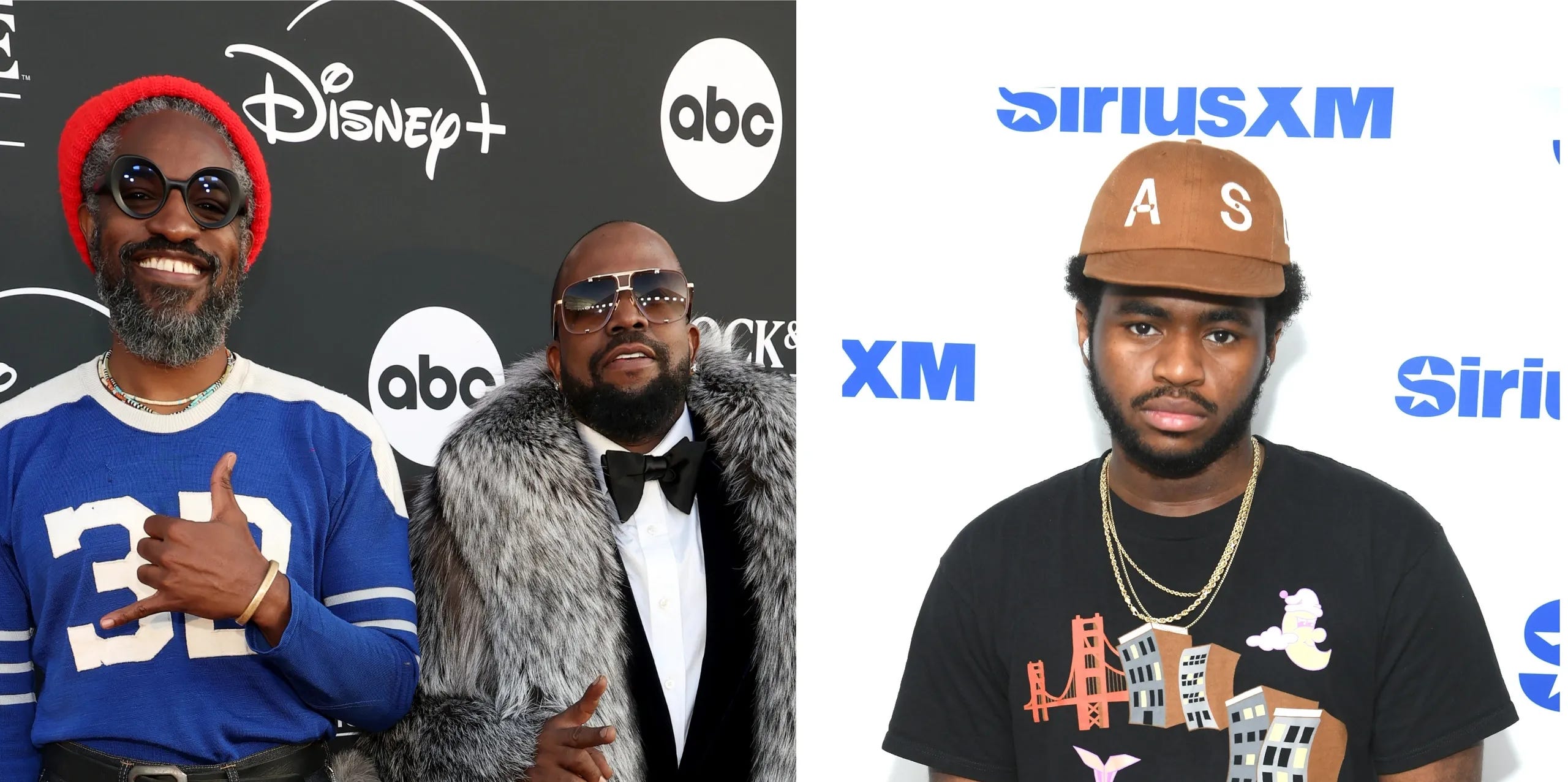
On September 16, High Schoolers LLC, the company André 3000 and Big Boi use to hold OutKast’s trademarks, filed suit in federal court in Georgia against Silas Wilson, the 27-year-old Oakland rapper and producer who records as Ovrkast. [XXL] The complaint alleges trademark infringement, unfair competition, and breach of a settlement Wilson had already signed. [Complex] None of it has been tested in court, and Wilson has not yet filed a response.
The easy version of this story is a big act stepping on a small one. The more useful version is about timing. OutKast has spent the last two years turning a dormant trademark portfolio into something it actively polices, and that shift says more about the economics of a 1990s catalog in 2026 than it does about how anyone feels about a spelling.
Go deeper: ask our chatbot about OutKast v. Ovrkast →
What Was Actually Filed
The plaintiff is not OutKast the group in any performing sense. It is High Schoolers LLC, the entity that owns the marks. That distinction matters, because a holding company has a legal duty that an artist does not: a trademark owner who declines to police a mark can weaken it. Enforcement is not optional in the way a grudge is optional.
The complaint describes Wilson’s continued use as an “improper, willful, unauthorized and illegal use of the nearly identical name,” and argues it is likely to “cause confusion” or “deceive the public into the false belief” that his work is connected to or sponsored by OutKast. [mxdwn] Those are the words of a pleading, not a finding. They are what one side has asserted.
The relief sought is broad. OutKast wants a permanent injunction barring Wilson from using Ovrkast or anything close to it across recorded music, merchandise, websites, social accounts, and commercial ventures. It also asks for his profits connected to the name, monetary damages, legal costs, and destruction of merchandise and marketing materials carrying it. [AllHipHop] A jury trial is demanded. [Stereogum]
The Deadline That Passed
This did not begin in September. OutKast’s attorneys sent a cease-and-desist in June 2025, and the two sides negotiated privately for roughly a year. [Stereogum] The result was an agreement with a specific exit: Wilson would retire OVRKAST by July 15, 2026, and move to OVERKXST, a respelling that keeps the sound and breaks the visual match. [The Source]
According to the complaint, the deadline passed without the paperwork being completed. A breach notice followed on August 5, with a compliance deadline of August 11. That one passed too. [Complex] Five weeks later the suit was filed.
That sequence changes the shape of the case. A pure infringement claim asks a court to decide whether two names are confusingly similar, which is a judgment call. A breach claim asks whether someone did the thing they promised to do by a date, which is much closer to arithmetic. By signing, Wilson arguably conceded the harder question and left himself the easier one to lose.
An Interview Becomes Evidence
The detail that turned this from a filing into a story is where OutKast found its proof of confusion. The complaint cites a July 2025 Rolling Stone interview in which Wilson described, in his own words, how often people mixed the two up. [Rolling Stone] “The worst thing I get is like, ‘The n---a think he OutKast,’” he said. “It’s like, ‘No, bro. I wasn’t even thinking about OutKast.’” [mxdwn]
Read it once and it is a complaint about being misread. Read it as a lawyer and it is a documented admission of actual consumer confusion, offered voluntarily by the defendant, in a national publication, while a cease-and-desist was already on his desk. Wilson has said the name came from the word “overcast,” not from OutKast. [Complex] Trademark law does not especially care. Intent is a factor in the analysis, but likelihood of confusion is the question, and he had already answered it on the record.
There is a practical lesson under the irony. Artists talk about their legal problems constantly now, on podcasts, on livestreams, in profiles. Anything said in those rooms is available to the other side. The interview was not a leak or a subpoena. It was a press cycle.
The Group That Once Argued the Other Side
OutKast spent six years of its prime defending the proposition that a name in a title is expression, not commerce. Rosa Parks sued the group and LaFace Records in March 1999 over the 1998 single that carried her name. A district judge dismissed the case that November, the Sixth Circuit revived parts of it in May 2003, and it finally settled in April 2005 with an undisclosed payment and a commitment to educational programming through the Rosa and Raymond Parks Institute. No party admitted wrongdoing. [Parks v. LaFace Records]
Pointing that out is not a gotcha. The two cases are legally unalike: Parks raised right-of-publicity and Lanham Act false-endorsement questions against a song title, while this is a stage name used as a source identifier in the same market. But the through line is worth naming. OutKast built its position in the culture partly by insisting that names are raw material for artists. Three decades on, the same group is arguing that a name is an asset with a perimeter.
Both things can be true. That is exactly what happens when a catalog stops being a body of work and becomes a balance sheet.
The ATLiens Template
The Ovrkast case is not an isolated impulse. In August 2024, High Schoolers LLC sued the Atlanta electronic duo ATLiens, arguing that OutKast coined the portmanteau of “Atlanta” and “aliens” for its 1996 album and that the duo’s masks and shared home city compounded the confusion. A federal judge in the Northern District of Georgia accepted a dismissal on February 20, 2026, after the parties settled on undisclosed terms, with prejudice. [Hypebeast]
Seven months separate that dismissal from this filing. The cease-and-desist to Wilson went out while the ATLiens case was still live. What looks like a one-off reaction to a spelling is closer to a program: identify the mark, send the letter, negotiate, settle, and litigate if the settlement does not hold.
It is worth being precise about what that program is for. OutKast has not released an album since 2006. In the absence of new work, the marks are the business. Every touring package, reissue, sync, documentary, and brand deal that might arrive in the next decade is priced partly on how clean the trademark file looks. A mark with unpoliced lookalikes in the same genre is a mark with a discount attached.
What a Name Is Worth Now
Ten years ago a case like this would have read as a curiosity. It reads differently in a market where rap catalogs are valued, packaged, and sold, and where the buyer’s diligence includes the trademark schedule. Ownership has been the animating question in hip-hop business coverage for a decade, but the conversation has mostly been about masters and publishing. Names have been treated as personality rather than property.
This filing is a reminder that they were always property, and that the older the catalog, the more of its remaining value sits in the name rather than the recordings. Streaming has flattened the income from a 1990s album into something predictable and modest. The upside is in everything the name can still license.
Which means the enforcement wave is likely to keep widening. There are a lot of respellings in rap, and they exist for a reason: search, domain availability, and the simple fact that every clean word is taken. The generation that built its identity on a dropped vowel is now colliding with a generation of rights holders who have finally hired someone to read the register.
What Wilson Actually Stands to Lose
Wilson is not an unknown. He started making beats at 17 in West Oakland, sold his first to MAVI in 2015, and produced “EL TORO COMBO MEAL” on Earl Sweatshirt’s Feet of Clay in 2019. [Hypebeast] He produced “Red Button” and “The Shoe Fits” on Drake’s For All the Dogs Scary Hours Edition in 2023, and has released albums steadily since Try Again in 2020, most recently While The Iron Is Hot in 2025. [Ovrkast]
That is the profile of an artist whose value is almost entirely accumulated recognition rather than chart position. Six years of credits, features, and word of mouth all point at one string of seven characters. A name change does not erase that, but it does force every listener, playlist, and credit line to re-learn him at once, and it is the part of his business he cannot re-record.
His public response has been short and not especially legal. “Ouch @Outkast,” he posted on X. On Instagram: “I thought it was love @andre3000 @bigboi (yes this is real),” and later, “I’m jus a young black man trying to get ahead.” [XXL] [Stereogum] The register is hurt, not defiance, which is its own kind of tell. He does not appear to be preparing to fight the similarity claim.
The Distance Between Two Words
The settlement already gave everyone the answer. OVERKXST keeps the sound Wilson built, keeps his pronunciation, and puts visible daylight between the two marks on a page. It was, by the standard of these disputes, a soft landing. The case exists because the paperwork behind that landing did not get filed, which is how most of these end: not in a clash of principles but in a missed administrative date that a holding company was obligated to notice.
What lingers is the shape of the thing. A group that once argued in federal court that artists should be free to use a famous name is now the party insisting that a name has a fence around it. Nothing about that is hypocritical. It is just what happens when the work stops and the catalog keeps going, and the only asset still appreciating is the word on the cover. In hip-hop, the name has always been the first thing an artist owns. This is the decade the industry started treating it that way.