


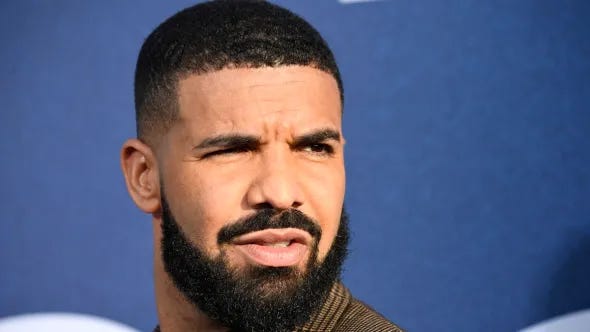
In less than twelve months, Drake watched his legal narrative flip completely on its head.
Early 2025? He was the one pointing fingers—telling a federal judge that the industry had conspired against him.
Early 2026? He’s on the other side of the courtroom, facing claims that echo his own almost word for word.
Same issue. Same language. Same alleged tactics.
Different seat at the table.
This is the story of how “manufactured popularity” went from Drake’s argument to Drake’s problem.
2025: Drake vs. the Machine
In January 2025, Drake went to war with his longtime label, Universal Music Group.
The spark? Kendrick Lamar’s diss track “Not Like Us.”
Drake claimed the record crossed the line—alleging the song defamed him and put his safety at risk. But the real meat of the lawsuit wasn’t lyrical. It was systemic.
Drake accused UMG of running a behind-the-scenes campaign to juice the record’s success. The claims read like a streaming-age conspiracy starter pack:
Bots inflating Spotify numbers
Influencers and podcasts quietly getting paid to push the song
Old-school payola tactics dressed up for the algorithm era
The argument was simple: fans were being misled, charts were being gamed, and Drake was taking collateral damage. His lawyers framed it as consumer protection—not rap beef.
October 2025: The Judge Wasn’t Buying It
That framing didn’t hold.
In October 2025, a federal judge tossed the case. The diss track? Protected speech. Rap battling as usual. No reasonable listener would mistake it for courtroom facts.
More important long-term: the streaming manipulation claims didn’t survive scrutiny either.
The court called them speculative. Too online. Too reliant on fan theories, tweets, and vibes. No hard proof. No clear consumer harm.
Drake announced an appeal later that month—but legally, the takeaway was blunt: a federal court had ruled his botting claims unproven.
That ruling would age… interestingly.
2026: The Lawsuit Turns Around
January 2026 brought the plot twist.
A class-action lawsuit landed in federal court—this time naming Drake as a defendant. Alongside streamer Adin Ross, others, and crypto-gambling platform Stake.us.
The accusation? That Drake helped promote an illegal gambling operation—and used the money to do something very familiar.
Artificially inflate his own streams.
According to the complaint, gambling proceeds were allegedly moved through Stake’s tipping system, routed to bot farms, and used to boost Drake’s music across platforms like Spotify.
Not just promo. Not just ads.
Bots. Amplification. Manufactured heat.
And the legal hook? RICO.
Why RICO Changes Everything
RICO isn’t a slap-on-the-wrist statute. It’s the same law built to dismantle organized crime.
To make it stick, plaintiffs have to show:
A coordinated enterprise
Repeated illegal acts
Ongoing, structured behavior
The lawsuit argues that Drake, Ross, and others functioned as a unit—promoting gambling, moving money, and manipulating music markets as part of one continuous operation.
It’s a huge leap from “playlist games” to “racketeering,” but that’s exactly why the case matters.
The Irony Is Loud
Here’s the part you can’t ignore:
In 2025, Drake said bots and covert payments distorted the charts and misled fans.
In 2026, plaintiffs say Drake did the same thing—just with a different funding source.
Same accusations.
Same vocabulary.
Same alleged harm.
The only thing that changed is whose name is at the top of the complaint.
Where It Stands Now
None of the 2026 allegations have been proven. Drake hasn’t been found liable. His appeal against UMG is still alive. Everything is still in motion.
But culturally? The moment is already locked.
This isn’t just about Drake. It’s about an industry where streams equal status, algorithms decide relevance, and “organic” success is increasingly hard to verify.
The irony is sharp—and the lesson even sharper:
When popularity becomes currency, the courtroom isn’t far behind.
Sources & Further Reading
Pitchfork: Drake Accused of RICO Gambling and Stream-Boosting Scheme in New Lawsuit (Jazz Monroe, Jan 2, 2026)
• Rolling Stone: Drake, Adin Ross Used Online Casino Money for Artificial Streams, Lawsuit Claims (Nancy Dillon & Jon Blistein, Jan 1, 2026)
• NBC News: Drake accused of using an online gambling platform to inflate play counts of his music (Corky Siemaszko, Jan 2, 2026)
• ABC News: Drake to appeal dismissal of his defamation case against UMG (Aaron Katersky & Angeline Jane Bernabe, Oct 29, 2025)
• NPR: New Drake lawsuit claims his label pushed ‘Not Like Us’ diss to defame him (Sidney Madden, Jan 15, 2025)
• YouTube: Drake and Adin Ross Accused Of Botting Streams In RICO Lawsuit (Rob Markman)
• Sapone & Petrillo, LLP: How can gambling get defendants in trouble with the RICO Act? (Jan 16, 2025)
• Kenney Legal Defense: Illegal Gambling and Sports Betting | Federal Criminal Defense (Karren Kenney, Oct 23, 2025)
• U.S. District Court (S.D.N.Y.): Opinion and Order, Case 1:25-cv-00399-JAV (Dismissal of Drake v. UMG)
