


🎧 The Culture Report
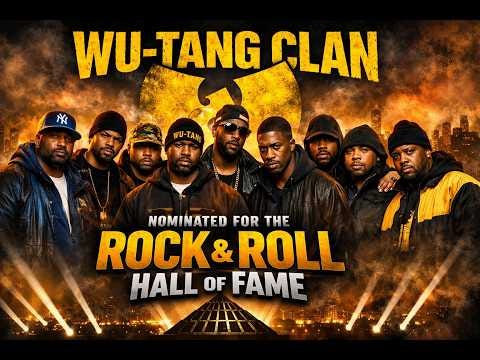
Wu-Tang, Queen Latifah & Sade Lead a Rock Hall Class That Looks Like Rap History
The Rock & Roll Hall of Fame’s 2026 class became official, with Wu-Tang Clan, Queen Latifah, Sade, and Luther Vandross at the center. [Sway’s Universe] Wu-Tang are framed as the crew that “changed the geometry of hip-hop forever,” proving a nine-member Staten Island collective could dominate charts and build a global empire off raw boom-bap and kung-fu tape samples. This year’s class is part of a longer arc that already includes LL Cool J, Eminem, DJ Kool Herc, and Missy Elliott. [HipHopWired]
One section of the coverage singles out Sade and Luther as “architects of soulful samples,” explaining how their catalog quietly underpinned decades of rap production. This isn’t just rock catching up to hip-hop’s cultural weight; it’s a signal that the canon is finally being written in a way that acknowledges both the voices and the sample bed hip-hop has been looping for years—recognizing that influence works both directions.
→ Understand Wu-Tang’s impact on hip-hop history →
──────────────────────────────────────
Cardi B vs. Tasha K: Sanctions Phase Gets Sharper
After Cardi’s multimillion-dollar defamation win and a bankruptcy settlement with a strict no-trash-talk clause, her lawyers now say Tasha K has blown past the rules—allegedly posting about Offset’s Florida shooting and discussing Cardi’s partner Stefon Diggs on podcasts despite the agreement. [The Source] Cardi’s attorneys are now asking for “economically painful” sanctions—escalating financial penalties for each violation—plus a tighter order barring Tasha from mentioning Cardi, Offset, or Diggs anywhere. [HotNewHipHop]
This is the test case for whether courts can actually throttle the “gossip as a business model” machine once a judgment is in place. If the judge approves escalating sanctions, it signals that the post-verdict phase has teeth—that silence isn’t optional, it’s enforced. If the motion fails, it opens the question of what a settlement actually means when the other side keeps talking.
→ Follow the Cardi vs. Tasha K legal saga →
──────────────────────────────────────
Gucci Mane vs. Pooh Shiesty: Label Beef in Federal Court Time
A U.S. Magistrate Judge found probable cause in an alleged kidnapping related to a Dallas studio confrontation, ordering Pooh Shiesty held while the case plays out. [Sway’s Universe] The FBI admitted they do not have the alleged contract that supposedly sat at the center of the dispute, giving Shiesty’s lawyer Bradford Cohen room to question the prosecution’s timeline—Cohen publicly argued that “The FBI doesn’t take three months to arrest someone if they believe everything that was said on the night that it occurred.”
Meanwhile, Gucci Mane flipped the situation into the diss track “Crash Dummy,” using it to once again prove his resilience and ability to turn real conflict into streaming-ready music, while Shiesty’s future remains uncertain. We’ve seen artist-label tension before; we haven’t often seen it intersect with alleged kidnappings, missing contracts, and public diss songs from the boss while the case is active. The legal and cultural threads are now tangled tight.
→ Understand the Gucci-Shiesty legal conflict →
──────────────────────────────────────
Pusha T, Quentin Miller & the Ghostwriting “Karma” Loop
Social media erupted when three alleged Quentin Miller reference tracks for Pusha T surfaced, the most notable being “Real Gon’ Come,” said to be from the 2017–2018 DAYTONA sessions. [HotNewHipHop] That matters because Pusha’s “Infrared”—from that same DAYTONA run—famously jabbed Drake with the bar “It was written like Nas, but it came from Quentin,” using Miller’s name as a symbol of inauthenticity. The tracks are framed as alleged reference songs, mainly hooks, and none of them actually came out—but fans are split, with some seeing no issue while others call it hypocrisy. [AllHipHop]
The story is less about whether Pusha had someone pen a throwaway hook and more about whether the culture applies its “no ghostwriters” standard consistently, or only when it hurts the opp. If Miller’s contributions to Pusha tracks are acceptable reference work, what does that say about the moral clarity of the Drake diss? The culture’s enforcement rules are suddenly on trial.
→ Examine the ghostwriting inconsistency debate →
──────────────────────────────────────
Streaming vs. Charts: The “Rap Is Down” Narrative Gets Checked
A Breakfast Club segment resurfaced in today’s chatter, reminding people that the “rap is dead on the charts” storyline doesn’t match the streaming reality—they referenced a 2025 industry conference where execs fretted that, for the first time in 35 years, no rap songs were in the Top 40. [YouTube] But more recent stats undercut the panic: hip-hop and R&B are still the most streamed and most consumed genres overall, with Don Toliver, Drake, Kanye West, Kendrick Lamar, and Future still leading globally—Drake hitting around 6.5 billion streams alone.
The conversation asks out loud whether charts still matter the way people assume, especially when catalog, playlists, and non-radio platforms are doing the heavy lifting. The gap between chart presence and platform dominance is the real story for anyone serious about where the genre actually stands—a gap that suggests the metrics we’ve relied on for decades might not be measuring what matters anymore.
→ Understand hip-hop’s real streaming power →
──────────────────────────────────────
Ghostwriting Power Dynamics: Jack Harlow & Jozzy in the Background
An analysis of Jack Harlow’s credit dispute with songwriter Jozzy kept trending as a counterpoint to the Pusha/Quentin debate—a white rapper allegedly asking a Black woman hitmaker to effectively erase herself from a record she helped shape. [Rap Industry] The piece digs deeper than the authenticity question: it asks whether this reflects a power dynamic the music business has quietly normalized for decades, where certain creators are pressured into invisibility.
The ghostwriting conversation in hip-hop usually focuses on “did you write your own bars?” while obscuring the economic reality and credit politics underneath. Who gets paid, credited, and visible is as important as who keeps it “real.” Ghostwriting isn’t just a moral question about authenticity; it’s a labor and equity one—and the Harlow/Jozzy case exposes how the two are tangled together.
→ Explore ghostwriting’s labor and equity dimensions →
──────────────────────────────────────
Bishop Lamont vs. “Spot-a-lie”: Age, Streaming & Real Success
In an interview pegged to his album Just Don’t Die, Bishop Lamont mocked Spotify as “Spot-a-lie,” arguing streaming systems underpay and flatten the culture and that we’ve started to equate success with views and charts rather than the actual quality of the craft. [Sway’s Universe] He calls the current wave the “internet generation,” where anyone can claim hip-hop without putting in traditional community work, and reframes success as artistic integrity—being “ill” like Cool Keith or Bahamadia is more important than outselling everyone with gimmicks.
Put next to the streaming versus charts discourse, Bishop’s stance reads like a veteran’s manifesto—in a week dominated by metrics and allegations, he’s arguing for a slower, more craft-driven scoreboard. It’s a reminder that not everyone is keeping score the way the industry wants them to.
→ Hear Bishop Lamont’s critique of streaming culture →
──────────────────────────────────────
Swae Lee’s Quiet Court Win
Swae Lee’s name floated through feeds via a recap of his resolved paternity suit—a confidential agreement that ended an alleged paternity dispute in Florida, with neither side saying more than what’s in the paperwork, described as “about as quiet an ending as it gets.” [HipHopWired]
In a climate where every dispute can become a circus, this was the opposite of the Cardi/Tasha lane: resolve it, seal it, keep it off the feed. Not every legal narrative in hip-hop is designed for content—some are designed for closure, and sometimes the quietest wins are the most dignified ones.
→ Learn about Swae Lee’s resolved paternity case →
──────────────────────────────────────
Hip-Hop x Hermès: Pre-Owned Access and “Quiet” Flex
A deeper analysis of how hip-hop and high fashion keep evolving together puts Hermès at the center—the exchange between the two is “not approaching a conclusion, it is deepening.” [The Source] The rise of authenticated pre-owned platforms in the U.S. has disrupted Hermès’ scarcity model, letting more buyers access Birkins, Kellys, and other signature pieces at below-retail prices—accessories that function as “quieter signals,” recognizable to the informed eye without giant logos, aligning with hip-hop’s mature taste for calibrated, coded luxury. [The Source]
Hip-hop spent decades breaking into rooms that didn’t want it; now the pre-owned market is redistributing those signifiers, changing who can wear the look and how it reads when they do. Luxury isn’t about gatekeeping anymore—it’s about knowing what the signals mean, and the community that built the culture gets to decide how those meanings shift.
→ Explore hip-hop’s evolving relationship with luxury →
──────────────────────────────────────
✌🏾 That’s a Wrap
This week wasn’t about one story — it was about pressure points.
Foundational figures are being reevaluated. Legal systems are stepping deeper into cultural spaces. Long-standing debates around authenticity, ownership, and success are resurfacing — with sharper edges.
Hip-hop isn’t just moving forward right now. It’s questioning itself.
──────────────────────────────────────