


🎧 The Culture Report
This week was about perspective — not just new music, but how the culture itself is being redefined by the voices shaping it.
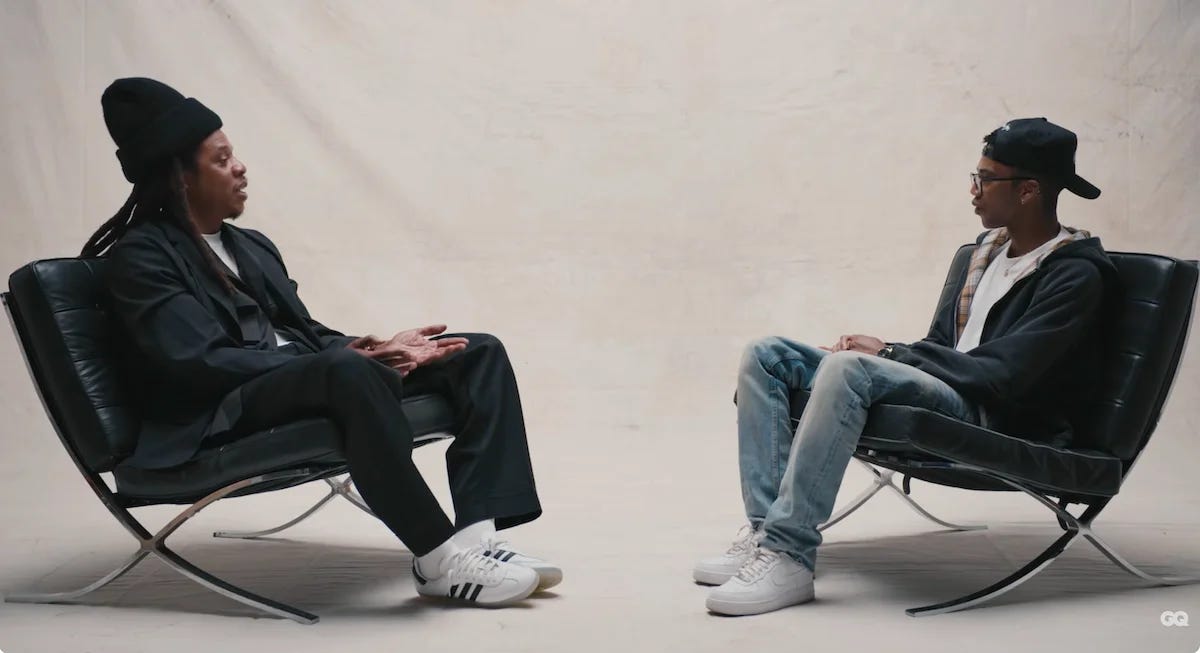
JAY-Z Resets the Tone on Rap Beef
JAY-Z weighed in on the Drake vs. Kendrick Lamar conflict, saying he “almost wishes” the battle never happened — not because he’s against competition, but because of what it turned into. While he still values lyrical sparring, he made it clear that this one crossed a line.
According to Hov, the issue wasn’t just the music — it was the fallout. He pointed to how quickly fan excitement turned into hostility, with supporters treating it less like a rap battle and more like a personal takedown, even dragging in family and off-limits territory.
For JAY-Z, social media is the multiplier. The way these moments spiral online, he argued, creates a level of toxicity that makes it harder to separate competition from real damage — and raises a bigger question about whether modern rap battles are still worth it.
TLC’s Chilli Linked to Pro-Trump Donations in FEC Filings
Rozonda “Chilli” Thomas of TLC is facing scrutiny after reports tied to FEC filings suggested she made a series of small political donations during the 2024 election cycle to entities connected to Donald Trump and MAGA-aligned Republicans.
The reported contributions total just under $900, including the majority directed toward Trump-affiliated PACs, along with smaller amounts to the NRSC and Senator Ted Cruz. While the donations themselves are relatively minor, the story is gaining traction because of Chilli’s cultural profile — and how quickly political affiliations can reshape public perception in today’s environment.
Ye’s Bully Signals a Reset — Musically and Personally
Kanye West’s Bully is his first solo album since Donda 2, and it’s being framed as more than just a release — it’s a reset. Coming off the Vultures era and a stretch of heavy backlash, Ye is repositioning himself both publicly and professionally, including a high-profile apology and a shift in tone around his controversies.
That reset extends to the business side: Bully is his first project under Gamma, the independent company led by Larry Jackson, signaling a move toward a more controlled, artist-first distribution model. Whether this marks a true turning point or just another phase, the rollout is clearly intentional — and the culture is watching closely.
J. Cole Finally Confirms the Infamous Diddy Fight — But Won’t Tell the Full Story
J. Cole has confirmed that he did get into a physical altercation with Sean “Diddy” Combs at a 2013 VMAs afterparty, putting an end to years of speculation around one of hip-hop’s most talked-about rumors.
But the bigger takeaway is what he didn’t say. Cole revealed he and his manager had already recorded a full breakdown of the incident — and chose not to release it, especially now, as Diddy faces serious legal issues. His reasoning was simple: revisiting the story today would feel like adding fuel to a situation that’s already under heavy scrutiny.
Cole made it clear there’s no lingering tension, noting the situation was resolved quickly and they’ve been on good terms for years. It’s a rare moment where restraint — not revelation — becomes the headline.
Attempted Burglary at Diddy’s Son’s Home Raises Security Concerns
Los Angeles police responded to an attempted break-in at a Porter Ranch mansion tied to Christian “King” Combs, son of Sean “Diddy” Combs, after reports of a burglary in progress just after midnight.
Authorities classified the incident as a “hot prowl,” meaning the suspects allegedly targeted the home while it was believed to be occupied — a detail that immediately raises the stakes. Investigators say the intruders attempted to force entry through the back of the property, damaging a door but ultimately failing to get inside.
No injuries were reported, but the situation underscores a growing pattern of high-profile homes being targeted — especially as public visibility around artists and their families continues to rise.
VERZUZ Returns With Tyrese vs. Tank — and a Clear Shift in Energy
The long-awaited Tyrese vs. Tank VERZUZ finally went down in Los Angeles, doubling as a relaunch moment for the platform through its new partnership with Apple Music and Complex. But this wasn’t framed as a battle — it was positioned as a celebration.
Both artists leaned into their shared history as TGT bandmates and their catalogs of classic R&B slow jams, setting the tone early: this was about nostalgia, chemistry, and vocals — not competition. The event was even billed as “For The Ladies” in honor of Women’s History Month, with early promotion emphasizing an intimate, women-first audience.
If anything, this VERZUZ felt like a reset — less about winners and losers, and more about reminding people why the format worked in the first place.
Druski’s Latest Sketch Sparks Debate Over Who He Was Really Parodying
Druski dropped a new sketch titled “How Conservative Women in America Act,” transforming into an exaggerated character using prosthetics, a blonde wig, and a full wardrobe shift — and the internet immediately locked in.
While he never names anyone directly, many viewers interpreted the character as a parody of Erika Kirk, tying the performance to a specific public figure rather than a general archetype. That ambiguity is exactly what’s fueling the conversation: satire, but pointed enough to feel personal.
As always with Druski, the joke lands — but the reaction becomes part of the content.
Drake Takes Aim at UMG Over “Not Like Us” — and Raises Bigger Industry Questions
Drake’s lawsuit against Universal Music Group centers on one core claim: that the label actively pushed Kendrick Lamar’s “Not Like Us” into global dominance despite lyrics he says are false, defamatory, and damaging to his safety and career.
According to the filings, Drake alleges UMG didn’t just promote the record — they “designed, financed and executed” a strategy to turn it into a viral mega-hit, even as it fueled public hostility toward him. He also claims the campaign involved artificial amplification tactics, including bot-driven streams and pay-to-play radio promotion.
Whether those claims hold up or not, the case is already bigger than the song itself — it puts a spotlight on how hits are manufactured, and how far labels can go when controversy becomes part of the business model.
J. Cole Says 50 Cent Passed on Signing Him — Over Tight Jeans
J. Cole shared a story from his early career about trying to sign with 50 Cent’s G-Unit — and getting turned down for a reason that feels straight out of a different era. According to Cole, 50 rejected the idea, allegedly saying his jeans were “too tight,” despite recognizing his talent.
Cole said multiple people around 50 were pushing for the deal, and he even performed tracks like “Simba” during an informal audition at 50’s Connecticut home. But in the end, the fit just wasn’t there — stylistically or culturally.
It’s a reminder of how much image once dictated opportunity — and how close some of hip-hop’s biggest careers came to taking a completely different path.
✌🏾 That’s a Wrap
This week wasn’t about one moment — it was about how the culture is evolving under pressure.
You’ve got Ye trying to reset his narrative, Drake challenging the system behind a hit, and JAY-Z stepping back to question whether competition still serves the culture the way it used to. At the same time, stories around Cole, Diddy, and even VERZUZ show how much context now matters — not just what happens, but when and how it’s told.
The pattern is clear: hip-hop isn’t just reacting anymore — it’s self-aware in real time. Reputation, narrative, and control are becoming just as important as the music itself.
And right now, everybody’s trying to rewrite their part of the story.