


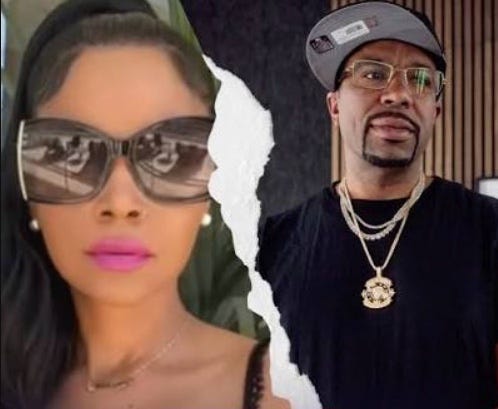
On Wednesday, Carmen Bryan filed a twenty-page civil complaint in New York accusing Victor Santiago, the rapper and podcaster known as N.O.R.E., of sexually assaulting her at a Manhattan nightclub in May 1999. [HotNewHipHop] [The Source] Almost every outlet led with who Bryan is in relation to two famous men. Almost none led with the actual reason this filing exists in September 2026 rather than in 1999, or 2005, or 2019.
That reason is a piece of municipal legislation, and it has an expiration date.
What Was Filed
Bryan, described in coverage as an author and entrepreneur, alleges that Santiago assaulted her at a club during a celebration tied to his album release. The complaint uses more graphic language than is necessary to repeat here. In summary form: it alleges a nonconsensual sexual assault, alleges he continued after she objected, and alleges that other people in the club intervened. [TheGrio] [NME]
The complaint frames the conduct as nonconsensual sexual contact, offensive touching, assault, battery, sexual assault and gender-motivated violence. Bryan seeks compensatory damages along with damages for emotional distress and mental anguish. [NME] Santiago is the only named defendant. The venue is not identified in the filing as reported, and no institution has been sued alongside him. [AllHipHop]
This is a civil action, not a prosecution. No criminal charge has been filed. The standard of proof is a preponderance of the evidence rather than beyond a reasonable doubt, and the remedy on the table is money, not custody. Those distinctions get flattened in headlines and they matter.
Why This Week and Not Some Other Week
The claim was brought under New York City’s Gender-Motivated Violence Protection Law. [TheGrio] [NME] That law has been on the books since 2000, and for most of its life it would have been useless to someone in Bryan’s position. A 1999 incident sat outside the statute’s reach twice over: too old for the ordinary limitations period, and earlier than the law’s own start date.
The City Council changed that. Int 1297-2025, sponsored by Selvena N. Brooks-Powers alongside forty-one other members and the Public Advocate, amended the law to open a new filing period and to reach conduct predating the statute’s original enactment. The mayor vetoed it on December 24, 2025. The Council overrode the veto on January 29, 2026, and the bill became Local Law 50 of 2026, effective immediately. [NYC Council]
The new section gives claimants eighteen months from the law taking effect. [NYC Local Law 50 of 2026] Practitioners working these cases read that as a window that opened January 29, 2026 and closes on or about July 29, 2027, and they are telling survivors it is not expected to reopen. [Sanford Heisler Sharp] [Rheingold Giuffra]
The Arithmetic Nobody Reports
Set the famous names aside and look at what the law actually does. The earlier version of this statute carried a limitations period measured in years and a hard floor at December 19, 2000, meaning nothing that happened in the twentieth century counted. The 2026 amendment removed the floor. [Emery Celli]
Now consider where hip-hop was in the years the old rules excluded. The late nineties and early two-thousands were the genre’s commercial peak and its least supervised period: label showcases, album-release parties, tour buses, radio promo runs, studio sessions that ran until morning, almost none of it covered by an HR department or a code of conduct. An enormous amount of the industry’s social life happened inside the five boroughs, which is the jurisdictional trigger this particular law requires.
So the window is not a general reckoning. It is a narrow, geographically specific, time-limited opening that happens to line up almost exactly with the era and the map of hip-hop’s New York center of gravity. If more filings follow, that alignment is why, and the deadline is the reason they will cluster rather than trickle.
What 1999 Offered Instead
The detail that traveled furthest this week was about Jay-Z. According to the complaint as reported, Bryan eventually told him what she says happened, and he offered to confront Santiago himself. She asked him not to, out of concern about how it would escalate. [Complex] Most outlets ran it as a celebrity cameo.
Read it instead as a description of the only enforcement mechanism available at the time. In 1999, in that world, a woman with a grievance against a rising rapper had two realistic options. One was a personal confrontation carried out by a man with standing, which in practice meant risking violence and guaranteed that the story would be relitigated as a beef rather than a harm. The other was silence. There was no third door. Bryan declined the first and took the second, and by the account in her filing she held it for more than two decades.
The third door is what Local Law 50 built. It is slow, it is public in a different way, and it arrives twenty-seven years late. It is still the first version of this that does not require somebody to get hurt.
What Moved It
Bryan’s attorney says she stayed silent until November 2023, when reporting on Cassie Ventura’s lawsuit against Sean Combs prompted her to reconsider. [AllHipHop] That is worth pausing on, because it describes a two-part machine rather than a single cause.
Disclosure and filing are different acts governed by different clocks. The cultural event supplies the first. It gives someone a template, a vocabulary, and evidence that the claim will be taken seriously rather than treated as an attack on a beloved figure. But disclosure alone produces nothing legally actionable if the limitations period ran out years earlier. The statute supplies the second, and only the statute converts a private account into a filed complaint.
Hip-hop media covers the first half of that machine obsessively and the second half almost not at all. It is why these stories keep arriving as surprises when they are, in fact, scheduled.
What Santiago Has and Has Not Said
He has not publicly addressed the lawsuit. Multiple outlets reported that he and his representatives did not respond to requests for comment. [HotNewHipHop] [AllHipHop]
Coverage of the complaint says that when Bryan’s side made contact in March 2026, ahead of filing, his representatives responded that he did not know who she was. [NME] [Complex] Bryan’s account disputes that. None of this has been tested. A pre-suit denial is not a legal position, an unanswered press request is not an admission, and the first document that will actually tell us anything is his answer to the complaint.
Until that lands, the honest description of this story is that a serious allegation has been formally filed and formally not yet answered.
The Next Twenty-Two Months
There is a version of this piece that is about N.O.R.E., and given what he built after the rap career, a show that became the place the culture goes to explain itself at length, that version practically writes itself. It is also the less useful one, because it ends when he responds.
The durable story is the calendar. A window opened in January over a mayor’s objection, it covers conduct the law previously could not reach, it is limited to things that happened inside New York City, and it shuts in the summer of 2027. Whatever is going to be filed under it will be filed in that span, and the volume will say something about the nineties and two-thousands that no oral history has managed to.
Watch the docket, not the discourse. The discourse arrives when a name is famous. The docket arrives when a deadline gets close.
Victor Santiago has not been criminally charged and has not responded to the complaint. The allegations described here are unproven. This piece will be updated if he or his representatives respond.