


In 2018, the Supreme Court cracked open legal sports betting in America and a land rush began. Casinos and online gambling operators needed customers fast, had no organic cultural credibility, and looked at hip-hop’s audience — young, global, fluent in risk as aspiration — and saw the perfect front office. What followed was a half-decade of rapper sponsorships, celebrity streams, and lifestyle content designed to make offshore wagering feel like part of the culture. Drake’s reported $100 million deal with crypto-casino Stake was the apex of that transaction.
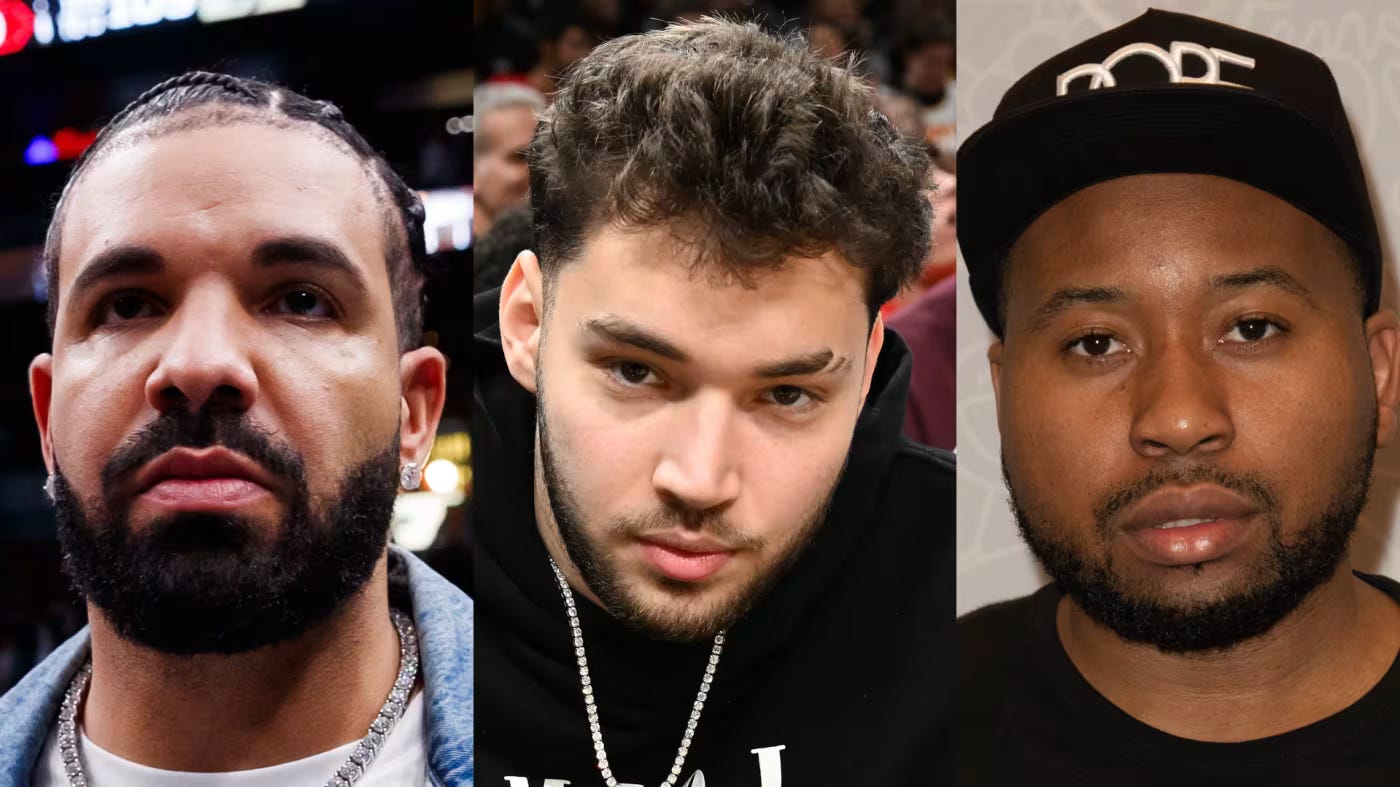
Now a federal lawsuit is asking whether the entire model was a scheme. New Jersey bettor Jason Nufio filed against Drake, streamer Adin Ross, DJ Akademiks, and Stake, alleging an illegal online gambling operation built on undisclosed financial arrangements, a virtual currency designed to obscure real money movement, and a content pipeline that blurred the line between peer participation and paid promotion. [AllHipHop] The timing is not coincidental. Juries just handed Meta and Google hundred-million-dollar verdicts for building platforms that were “addictive by design,” and plaintiffs’ lawyers are now applying that same architecture argument to a casino that runs its marketing through celebrity feeds.
This is not just a Drake story. It is a blueprint story — about what happens when an industry uses culture to manufacture the illusion of shared risk, and what the courts are starting to say about who pays when the illusion breaks.
The 2018 Switch: How Hip-Hop Became the Gambling Industry’s Marketing Department
When the Supreme Court’s 2018 ruling in Murphy v. NCAA overturned the federal ban on sports betting, it didn’t just unlock a new revenue stream. It fired the starting gun on a customer acquisition race that the gambling industry was not equipped to win on its own. Sportsbooks and online casinos had product. They didn’t have cultural fluency. They didn’t have audiences that trusted them. And they were entering a market where every new platform was chasing the same young, digitally native demographic.
So they bought it. The analysis is blunt: once legalization took hold, online casinos began actively seeking rapper sponsorships to attract young, engaged audiences — the same playbook sneaker brands and energy drinks had run through the culture for decades, now applied to wagering. Rappers and influencers offered exactly what gambling companies lacked: built-in communities, credibility, and a lifestyle that had spent thirty years making risk feel like aspiration rather than danger. The cultural infrastructure was already there. It just needed to be licensed.
Drake became the most visible example of that pivot. By 2022, Stake was reportedly offering him $100 million to be the face of the brand — a number that, if accurate, tells you everything about how much the gambling industry valued a single credible cultural voice. [The Source] What followed was a run of public bets that turned gambling into content: backing the Kansas City Chiefs to win back-to-back Super Bowls, posting wins of $1.48 million and $1.15 million. Taking notable losses — $1.2 million on Jake Paul versus Tommy Fury — that became memes about a “Drake Curse.” All of it broadcast in real time, all of it turning the act of wagering into something that felt communal, aspirational, and visible.
From a casino’s perspective, that was the dream. You’re not just selling a game. You’re selling the idea that betting is part of a lifestyle the viewer already wants. From a plaintiff lawyer’s perspective, it’s something else: a content pipeline engineered to make a legally gray offshore product feel as normal as a sneaker drop.
The “Addictive by Design” Doctrine — and Why It Travels to Gambling
The legal context that makes the Nufio complaint more than a long-shot nuisance filing is a pair of jury verdicts that established something courts had been reluctant to accept for years: that a digital platform can be held liable not just for what it hosts, but for how it is built.
In the first case, a jury ordered Meta and Google to pay $3 million to a woman who developed an addiction to Instagram and YouTube as a child. The jurors accepted that the design features of those apps — specifically the way they delivered content and feedback to maximize time on platform — caused measurable harm to her mental health. [Rap Industry] In a separate New Mexico case, Meta faced a $375 million verdict tied to findings that the company misled families about safety while knowing its platforms were being used by predators to contact minors. In both cases, the core argument was the same: these were not neutral tools. They were environments calibrated to maximize engagement and keep users locked in, even when the people running them had internal evidence of serious harm.
That logic — designed to hook, built to obscure the cost — maps directly onto what the Nufio complaint alleges about Stake’s content ecosystem. It’s not a perfect parallel. Gambling is regulated differently from social media, and the specific legal theories are distinct. But the conceptual leap juries are now willing to make is the same: if you build an environment that makes it hard for people to understand what they’re really getting into, and you profit from their confusion, that is not neutral product design. That is a choice you made, and it can be a liability. [The Breakfast Club]
That shift in legal thinking is what gives the Drake/Stake case its weight. Before the Meta verdicts, “addictive by design” lived in op-eds. Now it has a dollar amount attached to it. And the Breakfast Club was already using the phrase “attention economy” in regular rotation on daytime radio — describing how platforms slice up your time and sell it back to you — which means the conceptual vocabulary plaintiffs need to make this argument legible to a jury already exists inside the culture itself. [The Breakfast Club]