


For almost thirty years, the murder of Tupac Shakur belonged to everyone except a courtroom. It lived in documentaries and podcast episodes, in barbershop theories and message-board deep dives, in the mouths of men who claimed to know and the silence of men who actually did. It was the most discussed unsolved case in hip-hop history, and for three decades the discussion was all anyone got.
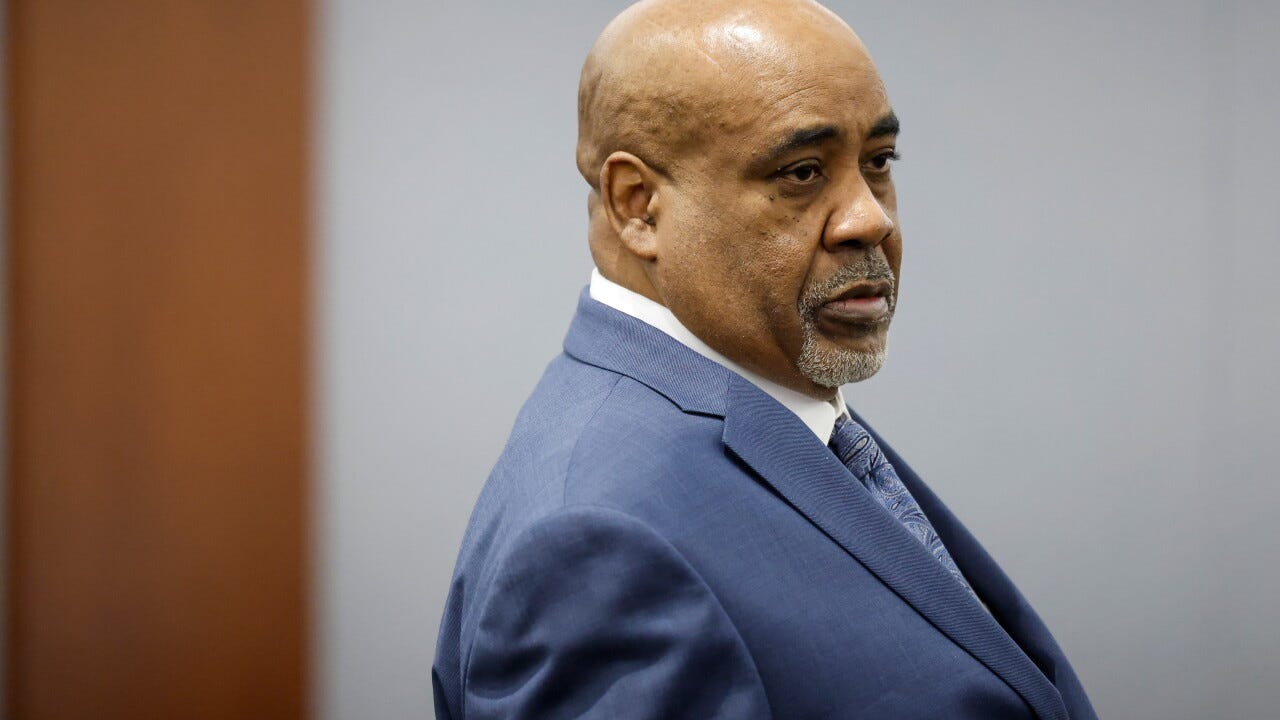
On Monday, August 31, that changed. A jury in Clark County, Nevada found Duane “Keffe D” Davis, 63, guilty of first-degree murder with the use of a deadly weapon for orchestrating the September 1996 drive-by that killed Shakur near the Las Vegas Strip. It is the first and only conviction ever secured in the case. The panel of ten women and six men deliberated for less than three hours. After thirty years of noise, the answer took an afternoon.
The night, and the silence that followed
The facts of September 7, 1996 were never the mystery. Shakur was riding in a BMW driven by Death Row co-founder Marion “Suge” Knight when a white Cadillac pulled up at a red light and opened fire. Shakur was hit multiple times and died six days later at 25. Knight survived. Hours earlier, Shakur and his entourage had beaten a man named Orlando Anderson in the lobby of the MGM Grand after the Mike Tyson fight. Anderson was Keffe D’s nephew.
Everyone in that world knew the shape of what happened. What they didn’t have was anyone willing to say it under oath. The case went cold not because it was unknowable but because it lived inside a culture with its own rules about talking to police, a silence the streets enforce more reliably than any alibi. For thirty years that silence held.
The man who couldn’t stay quiet
What finally broke the case was not new forensics or a cooperating witness. It was Keffe D himself. Over the years, Davis did the one thing the code forbids: he told the story, again and again, and got paid to do it. He described his role to federal agents in a 2008 proffer session. He said it on camera in a BET documentary. And in 2019 he laid it out in a memoir, Compton Street Legend, complete with a scene of the hunt for Shakur that night.
That was the material that put him in a courtroom. When Las Vegas police arrested him in 2023, he reportedly described his own case as the biggest in the city’s history. He was right about the scale, and wrong about who it would sink. The story he had monetized for years became the evidence against him.
The state’s case was, in the end, an argument that Keffe D had been telling the truth about himself the whole time.
A trial built on his own voice
The prosecution’s strategy was unusual and, it turned out, devastating. Prosecutors Marc DiGiacomo and Binu Palal barely needed to make an argument in their own words. Across two weeks they played roughly eight hours of Davis’s recorded statements, from the 2008 proffer to the documentary to jail calls recorded after his arrest, each version placing him in the Cadillac beside Shakur. Their theory never required him to have pulled the trigger. Under Nevada law, a person who orchestrates a killing is guilty of it, and the state cast Davis as a South Side Compton Crips shot caller who got the gun and gave the order in revenge for his nephew.
The witnesses filled in the frame. An Outlawz member who was there, E.D.I. Mean, described the white Cadillac and the gunfire from the back seat, though he could not name a soul inside it. A retired Compton gang detective testified that a younger member could not have fired with Davis present unless Davis allowed it. Jurors heard Davis, in his own recordings, place the gun in his nephew’s hand and speak of expecting a payoff. They even watched him promote the book, telling viewers they could get the real truth for twenty dollars.
The defense, led by Michael Sanft, had one move and made it repeatedly: none of it was true. Davis’s confessions, Sanft argued, were tall tales manufactured for money and notoriety, and the reason Davis was never charged for decades was that investigators themselves knew he was, in his words, “full of crap.” It was a genuinely strange position, a lawyer asking a jury to believe his client is a liar, and it carried a built-in trap. Sanft called just three witnesses, all former officers, and rested in under two hours. Davis did not testify. After telling jurors not to trust a word the man said, putting him on the stand was never really an option.
The verdict
It did not take long. On an open charge that let them choose second-degree, jurors chose first. Prosecutors dismissed the gang enhancement, so the conviction stands on first-degree murder with a deadly weapon. In his rebuttal, DiGiacomo had held up a scrapbook of Tupac clippings found in Davis’s home and told the jury, “This guy’s scrapbooking his murder, for God’s sake.” The line landed.
The room split the way the case always had. Tupac’s sister, Sekyiwa “Set” Shakur, wept and embraced the prosecutors. Davis’s son covered his face. Davis stood silent as the verdict was read, then raised a fist toward the gallery as he was led out, and told the judge he intends to appeal. He remains jailed ahead of sentencing on October 13, where he faces a maximum of life in prison.
What it actually means
Strip away the history and this is a case about narrative, which is fitting, because so is hip-hop. Keffe D spent years turning his proximity to a legend’s death into currency, understanding better than anyone that in this culture the story is the asset. The tragedy of his conviction is that he was right. The story was worth something. It was worth his freedom.
It is worth being honest about what the verdict does and doesn’t settle. There was no DNA, no murder weapon, no fingerprint placing Davis at the scene; the physical trail went cold decades ago, and the case rested heavily on his own uncorroborated words. An appeal is coming, and the questions that always hovered around this story, including the claims about a payoff and the names Davis floated over the years, were never fully resolved in court. Sean Combs, whose name surfaced in Davis’s own statements, has consistently denied any involvement and was never charged.
But something real happened on Monday that had never happened before. For thirty years the culture told this story to itself, and the telling was all there was. Now twelve strangers have done what no documentary or podcast could. They returned a finding of fact. One of hip-hop’s oldest open wounds finally has a verdict attached to it, and whatever the appeals bring, the record is no longer empty.
We covered this trial day by day as it happened, from opening statements through the confession tapes, the shot-caller testimony, and the verdict itself. For the full timeline, every witness, and the evidence that decided it, read our complete day-by-day coverage:
The Keffe D Trial: Full Day-by-Day Coverage → history.hiphop
Ask Hip-Hop covers the culture as a living thing, not a headline. If this is your first time here, subscribe for the stories behind the stories.