

What Happened in Hip-Hop: 4/6/26
Kanye at Wireless, Drake in court, Pooh Shiesty’s dad out on bond, BigX on Fallon, and nine more things worth your attention today.

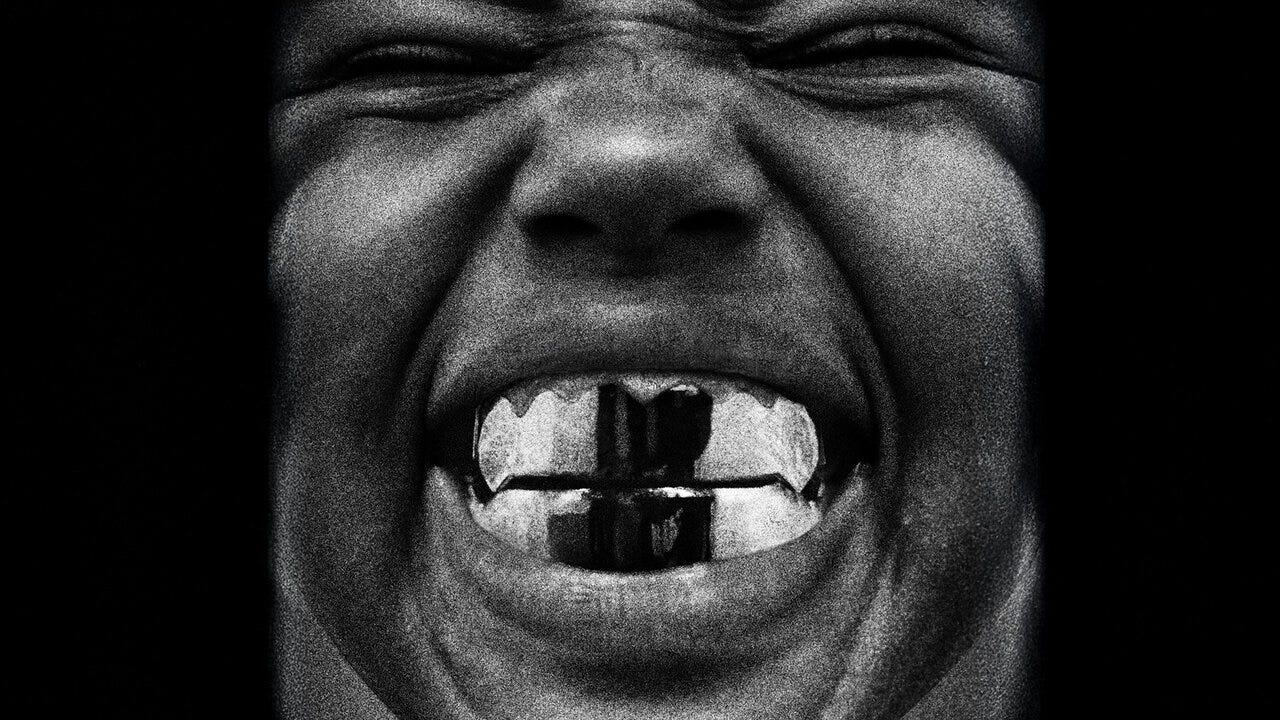
Kanye, Wireless, and the New Clash Between Stages and Sponsors
Kanye West just turned a UK festival into a geopolitical case study. Wireless booked Ye to headline all three nights at London’s Finsbury Park this July — his first UK show in 11 years — essentially making Bully the centerpiece of their 2026 identity. The fallout was immediate.
UK Prime Minister Keir Starmer called the booking “deeply concerning,” stressing that you can’t ignore Ye’s antisemitic and pro-Nazi history if you want Jewish people to feel safe in Britain. London mayor Sadiq Khan’s office said his past statements “are offensive and wrong and are simply not reflective of London’s values” — while admitting the city can’t directly kill the booking. Jewish organizations reminded everyone that after a prior apology, Ye still went on to release “Heil Hitler” and sell swastika merch. [HotNewHipHop] Then the sponsors started walking. Pepsi, Diageo, Rockstar Energy, and PayPal have all dropped their Wireless ties since the announcement. [XXL]
Historically, hip-hop has pushed institutions into uncomfortable territory before — from “Cop Killer” to the PMRC fights — but this feels different. Bully just pulled one of the biggest streaming debuts of 2026, with Gamma claiming close to 50 million first-day Spotify streams and calling it the year’s biggest hip-hop release to date. Yet the corporations that usually ride shotgun are treating Ye like a live grenade. The tension is clear: fans still show up, festivals still book, but brands and governments are finally pricing in the cost of alignment.
Drake vs. Kendrick vs. UMG: When a Rap Bar Becomes a Legal Precedent
The Drake–Kendrick battle is now a case study in what a diss line can do in court. Drake’s defamation suit against Universal Music Group — not Kendrick — hinges on one phrase from “Not Like Us”: “certified pedophile.”
A federal judge tossed Drake’s suit in October 2025, calling Kendrick’s lyrics “nonactionable opinion” in the context of a rap battle — not factual claims you can sue over. Drake appealed in January, arguing that letting this slide creates a “dangerous categorical rule” that diss bars can never be defamatory, no matter how specific. UMG fired back on March 27, saying Drake’s position would “critically undermine” a form built on “exaggeration, insult, and wordplay” — and pointing to his own accusations about Kendrick being a domestic abuser and deadbeat father as proof he knows how this game works.
Now Yale Law scholars have jumped in on UMG’s side. In a new brief, they compare the battle to a prize fight: Drake invited Kendrick to “talk about [Drake] likin’ young girls” on “Taylor Made Freestyle,” and Kendrick took that invitation. Consent, they argue, kills the defamation claim. [XXL]
This isn’t the first time rap lyrics have hit a courtroom — think C-Murder, Bobby Shmurda, the “Rap on Trial” hearings. The twist is that Drake previously called using lyrics as evidence “un-American and simply wrong” in a 2022 petition. Now he’s asking a court to treat one of the most-watched diss tracks ever as a factual document. The appeals court will hear it in the coming months. However it breaks, that ruling is going to live in every future lawyer’s brief the next time a bar goes too far.
Pooh Shiesty, Gucci Mane, and a New-Era Snitching Morality Play
The Gucci Mane–Pooh Shiesty–Big30 federal case is turning into a referendum on street codes in the streaming age.
The latest: Pooh Shiesty, out on house arrest after his 2023 prison release, is accused of violating his conditions and taking part in what feds call an “armed takeover” at a Dallas studio — a dispute reportedly tied to business involving Gucci. [The Source] An FBI agent testified there’s no clear surveillance proving Shiesty or Big30 personally brandished guns at Gucci, but a judge still found probable cause to push the case forward, backed by GPS data, cell records, rental cars, surveillance footage, fingerprints, social posts with alleged stolen property, and Greyhound records tracking the trip back to Memphis. [XXL]
Pooh’s father, Lontrell Williams Sr., just got out on bond; prosecutors say he was in the room when things turned violent and that two co-defendants held Gucci at gunpoint during what was supposed to be a negotiation. [The Source] Big30 was granted a $100K bond with home detention and tight travel limits, but can keep working — a weird modern compromise between freedom and algorithm. [AllHipHop]
Then there’s the paperwork politics. Gucci allegedly helped identify Big30’s Instagram account to investigators; an inmate filmed himself throwing Gucci’s book off a tier for “cooperating.” [HotNewHipHop] DJ Akademiks went on livestream siding with Gucci and openly clowning the old “no cooperation” code: “So shoutout to Gucci… Yo, this is crazy. I need a drink, man.” 21 Savage, who just did a whole rollout asking “What Happened to the Streets?”, was seen rapping along to Pooh’s comeback record “FDO” — drawing heat from people who think you can’t denounce the streets and then publicly ride for someone under this kind of federal cloud. [HotNewHipHop]
Historically, Gucci’s own lore was built on beating a murder case and wearing self-defense mythology like a coat. This time the culture has to process what it means when the same figure is accused of turning into an identifying witness — and when the “media guy” is the one most comfortable saying he’d do the same.
BigXthaPlug & 600 Entertainment: Texas Street Rap Goes Late-Night
On the other end of the spectrum, Texas street rap is taking a victory lap on mainstream TV. BigXthaPlug and 600 Entertainment just hit The Tonight Show, bringing their Dallas energy into late night. [The Source] 600’s roster — six rising rappers including KevanGotBandz and KaineMusic — is being framed as a new regional engine pushing the boundaries of modern hip-hop with an authentic street sound, with records like “I GO,” “Meet the Sixers,” and “600 Degrees” building a growing catalog. Earlier this year they took that same energy to Nashville’s Ryman Auditorium for an Apple Music Live “BigX and Friends” special — which is wild if you know what that room means to country music history.
Texas has always had national moments — Swishahouse, early Trae, UGK going global off “Big Pimpin’” — but this feels like a different play: a small, focused label using streaming momentum to leap straight into Apple Live and Fallon territory without watering down the core sound. In a week where Ye is still fighting to be seen as bookable, this is the other side of the live ecosystem — regional street rap turning into TV-ready product without sponsors flinching.
Cardi B & Lil Kim at MSG: A Living Line From Blueprint to Present
The women’s side of the canon got a visual thesis statement at Madison Square Garden. Cardi B and Lil Kim shared the stage at sold-out NYC shows, and the crowd treated it like a coronation. [The Source] Afterward, Cardi went to IG and put it plainly:
“You are forever and always the blueprint and a queen, and you need to NEVER forget that!!! F*ck all that humble shit — you deserve to walk in your power every day.”
For anyone who remembers Kim getting iced out of mainstream conversations during the Nicki rise, this is a quiet course correction. The culture is slowly getting more comfortable saying the quiet part out loud: Kim is foundational to how a lot of today’s stars look, rap, and posture, and it doesn’t diminish the current era to say that. In a week where Ye’s legacy is being relitigated in court and in parliament, Kim’s is getting reaffirmed on stage by one of rap’s biggest contemporary women — a different kind of canonization, inside the house, not from the academy.
GloRilla, Family, and the New Public Line on “You Owe Me”
The messiest family moment today isn’t in a song; it’s on IG Stories. GloRilla’s sister Victoria Woods went viral after criticizing their dad online for chasing clout and allegedly expecting Glo to cover his light bill. The discourse turned fast: why doesn’t she pay if she feels so strongly? Woods doubled down today:
“The f*ck I look like paying this n***a light bill when he got online and lied on me… I had to come with receipts and prove everything.”
Minor story on the surface, but it sits in a longer thread: parental entitlement in the streaming era, where a rapper’s success becomes a public contract their whole family feels licensed to renegotiate online. Stack it next to Tee Grizzley’s mom, who’s currently blasting him from Detroit for allegedly living it up in Monaco while she’s “walking everywhere” after getting out of jail. [HotNewHipHop] The through-line: the line between “I made it, I owe my folks” and “boundaries, even with blood” is getting redrawn in real time, on platforms that never forget.
Jay Electronica vs. His Own Audience (Again)
Jay Electronica’s LA show last night turned into a live experiment in how much patience a cult hero can demand. Fans started booing during “Exhibit C” — the one record most of the room unquestionably agrees on — and Jay chose to confront instead of smooth it over. [AllHipHop] On mic:
“If you love my sh*t, shut up and listen to the words. Sometimes n*ggas will think that they f*ck with me and they don’t. If you f*ck with me, shut the f*ck up and listen to the bars.”
When some kept booing, he called them “cowards” and walked into the crowd looking for hecklers. The mic eventually gets cut; he promises “If my mic goes out, you’re next,” then softens when a fan says they came to see him — “it’s all love.” [HotNewHipHop]
One recap nailed the tension: “Hip-hop crowds usually want the moment they fell in love with. Artists sometimes want to give you the moment they’re living in now. There has to be a happy medium.” Jay Elec has always walked that line — the most enigmatic rapper alive with a handful of mythic records and a refusal to perform like a legacy act. This LA show just added another chapter to a long story about what happens when cult fandom meets real-time human behavior. [AllHipHop]
Trim, bbymutha, and the Next Wave of Women Building Their Own Worlds
Underneath all the high-drama headlines, the next wave is quietly pushing the culture’s margins out. Charleston rapper Trim dropped “CHRÖME,” another braggadocious entry in a run of viral singles that already includes “BOAT” and its remixes. She’s building toward a debut EP titled PASS THE TIARA — a title that reads like a thesis. Her bars are fully self-authored: [HotNewHipHop]
“White corset, put this sh*t on / Make my stylist turn me Chrome / I made two hits on this phone / B*tch, alone, I became known.”
In Chattanooga’s orbit, bbymutha just unveiled the tracklist for her new project rent due — 15 songs deep with features from Lisha G, Vayda, and Fly Anakin, plus a track titled “mutha massacre’s metal mania!” that hints at how weird she’s willing to get sonically. [HotNewHipHop] Both are building worlds first and worrying about polite respectability never. In a day where Cardi is publicly anointing Lil Kim as “the blueprint,” the next gen is already sketching alternate blueprints in real time.
POP GAME and the Emotional Frequency of Gen Z
Out in the Bay, there’s a different kind of energy bubbling. A deep-dive profile on San Francisco’s POP GAME frames him as “the new voltage” of Gen Z underground rap — someone who naturally lives at the intersection of pressure, introspection, and street language. [The Source] The writer’s case for him:
“He knows how to turn internal conflict into narrative. He knows how to make pressure sound personal. He knows how to write from the place where memory, instinct, pain, discipline, and ambition all collide.”
The context matters: Gen Z grew up under instability, digital overload, nonstop comparison, economic pressure, and a culture that changes its mind every few hours. They want music that acknowledges that while still knocking. If you zoom out, POP GAME is tapping a thread that runs from early Soulja Slim confessionalism through early Future and into the current wave of regional scenes — pain music, but with a narrative craft that feels distinctly post-social media.
Lil Nas X, Mental Health Court, and a Different Kind of Diversion
On the legal-system front, Lil Nas X just walked into a rare hybrid of accountability and compassion. In his LA assault case, a judge ordered him into a two-year mental health diversion program instead of straight punishment. [XXL] The judge’s framing was direct: “When treated, he is much better off, and society is much better off,” emphasizing that his time at The Meadows treatment facility in Arizona was “absolutely successful.” If he completes the program, the charges can be dismissed.
Hip-hop’s history with the courts is heavy — from the Rockefeller laws to Meek’s probation nightmare — but this is a different script: acknowledging that some charges sit on top of untreated mental health, and that treatment can be a valid alternative to warehouse time. It’s not a revolution. But in a week where Drake’s trying to turn a diss line into a legal precedent and Pooh Shiesty is fighting a fed case with GPS data stacked against him, Nas X’s deal is a rare example of the system choosing to bend instead of break.